
Why Los Angeles Conditions Change the Rules
Los Angeles mixes hot, dry summers with mild, wetter winters. Coastal neighborhoods get marine layer and salt in the air. Inland valleys see higher heat and UV exposure.
Durability comes down to how your coating handles:
- Intense sun
- Salt-laden air
- Moisture from rain, condensation, or small leaks
Systems that allow incidental moisture to move outward and evaporate tend to avoid blistering and widespread peeling on masonry. Dense-film coatings can still perform well—but only if the wall assembly stays dry and is meticulously detailed.
How Limewash Works—and Why It Lasts on Masonry
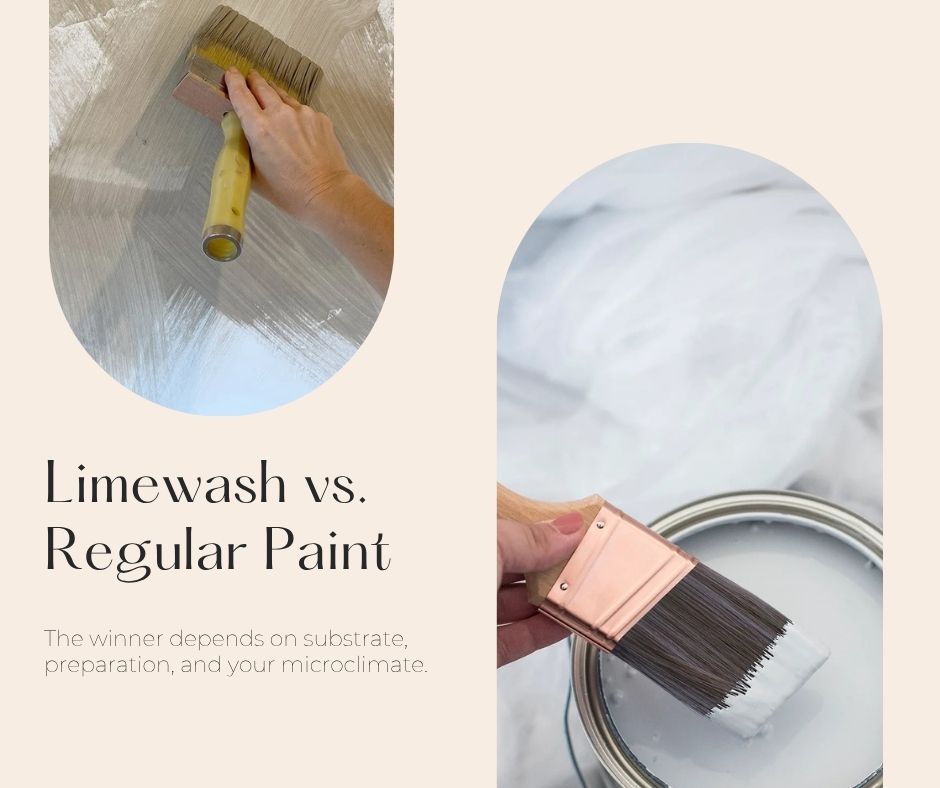
Limewash is a mineral coating made from slaked lime and natural pigments. On stucco, brick, and stone, it doesn’t just sit on the surface—it chemically reacts with carbon dioxide to form a rock-like matrix that bonds into the pores of the masonry.
Key advantages in LA:
- Mineral-to-mineral bond remains stable under intense sun
- Highly breathable: lets trapped moisture escape, preventing pressure buildup
- Ages gracefully through patina—not catastrophic peeling
- Exterior touch-ups blend seamlessly
- Interior application (over mineral primer on drywall) creates a premium, low-glare, textured finish ideal for design-focused spaces and photo studios
How Regular Acrylic/Latex Paint Performs
Acrylic and latex paints form a continuous, flexible film that offers:
- Uniform color and predictable sheen
- Broad compatibility across substrates
Best suited for:
Wood siding, trim, factory-sealed boards, and metals—where a protective film is essential.
On masonry:
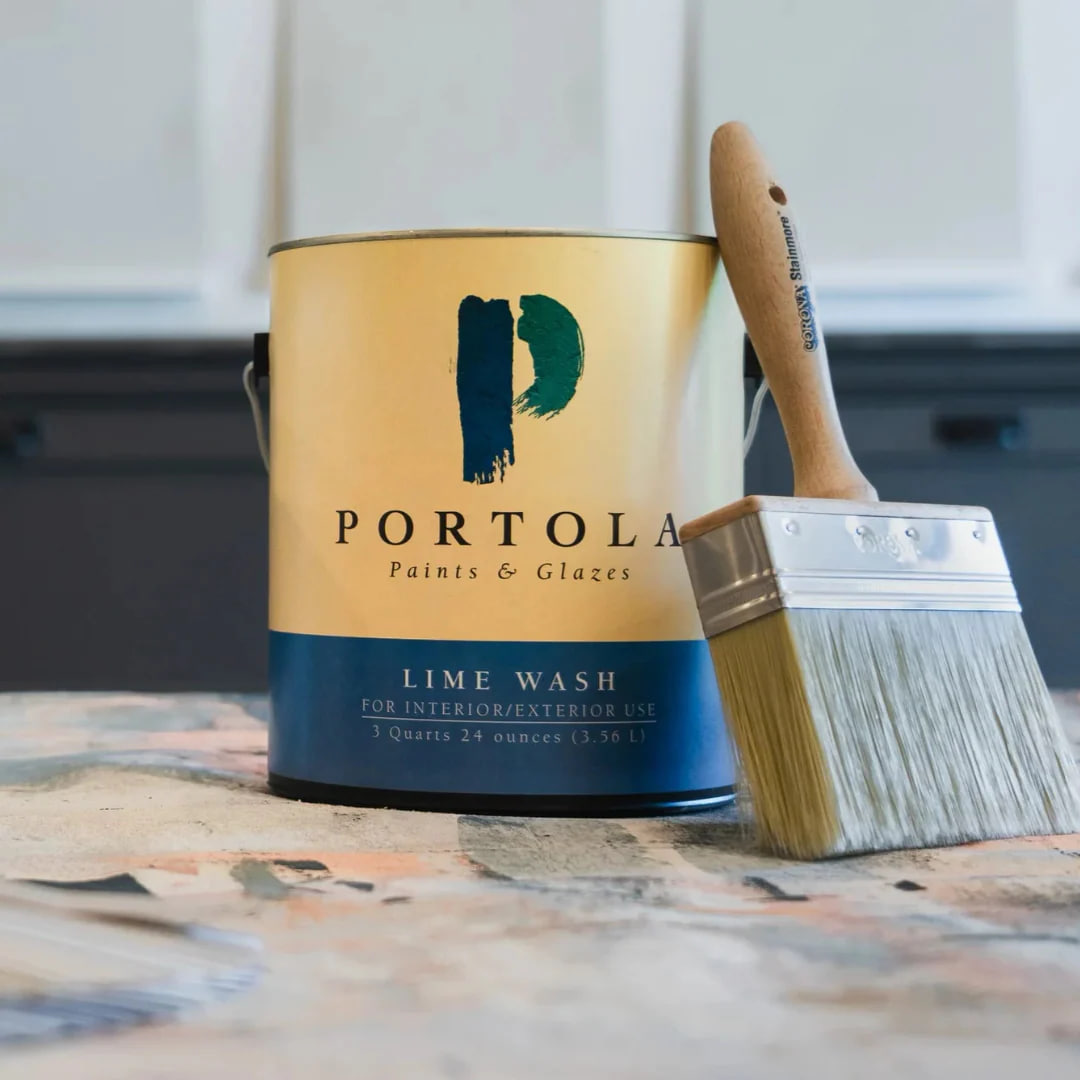
The same film can be durable if the wall stays dry and is well-detailed. But if moisture enters (via cracks, failed flashings, or capillary action), drying through a dense film is slow—leading to bubbling, peeling, or adhesion loss.
Good detailing and proactive maintenance keep acrylic systems in the safe zone. Without them, failure can be sudden and costly.
Expected Service Life You Can Plan Around
- Exterior acrylic systems in California typically last 5–10 years, depending on location:
- Shorter near the coast (due to salt and humidity)
- Longer inland with top-tier products and perfect prep
- Mineral systems on compatible masonry often go significantly longer between major refreshes—because they weather by patina, not film failure
Note: Prep quality, exposure, and building detailing affect longevity far more than brand names.
Substrate-by-Substrate Verdicts for LA
Stucco and Brick Exteriors
Best for longevity (especially near the coast): Limewash or mineral paint.
- Integrates with the wall
- Handles sun and moisture cycles well
- Supports drying after fog or rain
If you prefer a painted look: Choose mineral-based paints—not low-permeance acrylic films.
Previously Painted Masonry
- Exterior: If the existing coating is sound and you want uniform color, a premium acrylic system (with proper prep) can work. Switching to limewash requires careful assessment of adhesion, moisture behavior, and detailing.
- Interior: Use a mineral undercoat to create a compatible base, then apply limewash for an authentic finish.
Interior Drywall
- Limewash: Ideal for low-glare, high-character spaces (e.g., studios, lobbies, designer homes).
- Acrylic: Better for high-traffic or high-moisture areas needing washability, precise sheen control, or scrub resistance.
Wood and Metals
Stick with high-quality acrylics or specialty coatings.
Limewash isn’t designed for long-term performance on bare wood or metal without complex, multi-layer systems. Film-forming coatings better handle movement, weather exposure, and corrosion protection.
Which LA Microclimate Are You In?
Coastal Zone (Santa Monica, Venice, South Bay)
Challenges: Salt, persistent marine layer, slow drying
Best picks:
- Mineral coatings on masonry (for breathability and color stability)
- Marine-grade acrylics on trim and metals
Inland Valleys (Studio City, Sherman Oaks, Pasadena, SGV)
Challenges: High UV, intense heat, sharp afternoon sun
Best picks:
- Mineral systems for colorfastness and graceful aging on masonry
- Premium acrylics—if assemblies are stable and shaded details reduce thermal stress
Hills and Canyons
Challenges: Wind exposure, temperature swings, microclimates
Best approach: Prioritize crack management and flashing details first—then choose coating type based on actual wall assemblies in each zone.
Maintenance and the Real Cost of Durability
- Limewash on masonry: Requires light, periodic refresh—not full strip-and-repaint.
→ Plan annual post-rain inspections, quick flashing fixes, gentle washing, and small touch-ups that blend naturally. - Acrylic systems: Benefit from regular cleaning, joint maintenance, and spot priming to prevent film failure.
In LA, the most expensive event is a wholesale repaint after widespread peeling. A system that helps walls dry—and avoids that failure—often wins on total cost of ownership.
Health and Compliance, Stated Simply
Reputable brands sold in Los Angeles comply with local air-quality and coating regulations, including VOC and odor limits for residential and commercial use.
✅ Tip: Buy from established manufacturers or local showrooms, and always review the latest technical data sheet—this ensures you’re within accepted local standards without navigating complex regulations yourself.
When Acrylic Clearly Wins
- Wood siding
- Factory-finished boards (to preserve warranties)
- Handrails, doors, and metal elements
- Spaces requiring scrub resistance or exact sheen control (e.g., kitchens, bathrooms, commercial lobbies)
When Limewash Clearly Wins
- Historic or highly porous masonry
- Coastal stucco/brick exposed to marine moisture
- Interiors where an ultra-matte, handcrafted finish supports brand identity or design vision
A Practical Decision Checklist for LA Property Owners
- Identify each substrate by area: stucco, brick, block, drywall, wood, metal
- Map your microclimate: marine influence vs. inland heat/UV
- Choose your maintenance style: light touch-ups with graceful aging vs. full repaint cycles
- Verify product legitimacy: Use only reputable brands active in LA; review current technical data sheets
- Test before you commit: Apply samples on your actual walls, in your real lighting
Bottom Line
On LA masonry, a correctly specified and professionally applied limewash or mineral system typically provides the most resilient, low-risk path to long service life—because it integrates with the wall, supports drying, and ages by patina.
On wood, metals, and most trim, a premium acrylic system remains the smart, durable choice.
The right answer isn’t a slogan—it’s a site-specific specification.
The VesaPainters Approach
We don’t guess. We assess.
- Evaluate your exposure, wall assemblies, and detailing—by area
- Run targeted adhesion and moisture tests
- Specify the right system: mineral for masonry where it makes sense, acrylic where a film is the correct tool
- Execute cleanly and efficiently around your schedule
- Provide a simple, actionable care plan to extend time between major repaints