
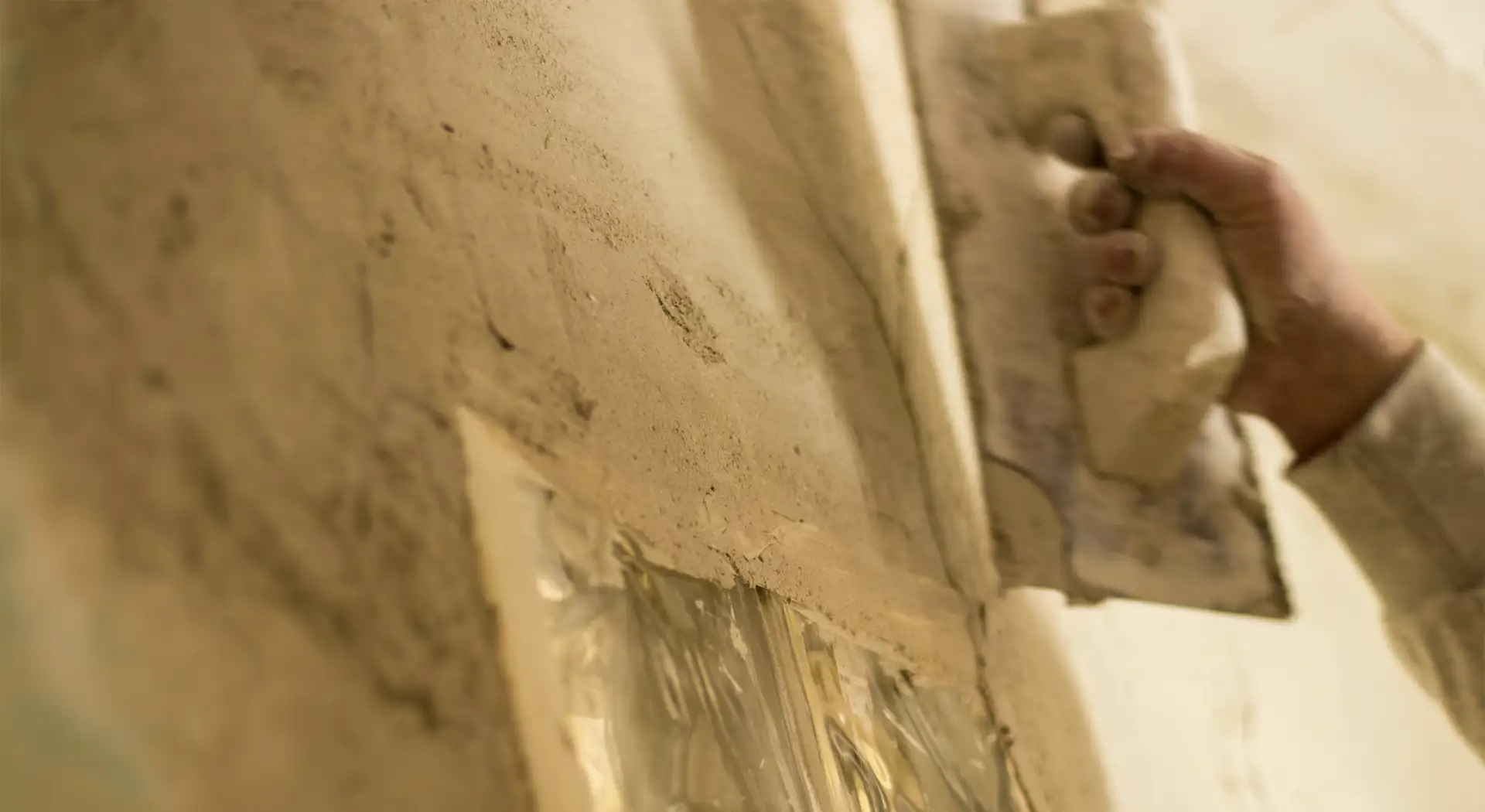
Roman Clay gives you the softest, most forgiving texture for interior accent walls; Venetian plaster is the one that can be polished into a hard, glass-like surface strong enough for wet-rated applications; limewash is the most breathable option, built for exterior masonry and interiors where a weathered, matte patina is the goal. All three are hand-applied, mineral-adjacent finishes — but they’re different materials with different strengths. Here’s how they actually compare, factor by factor.
Composition — What Each One Is Actually Made Of
- Roman Clay: clay-based coating, zero-VOC, sold pre-mixed by Portola Paints in more than 75 colors.
- Venetian Plaster: aged slaked lime putty combined with finely ground marble dust; some modern versions add up to 2% acrylic polymer for workability.
- Limewash: hydrated lime (often matured for years) mixed with water and mineral pigments — no acrylics, no film-forming binder.
The practical takeaway: Venetian plaster and limewash both rely on lime chemistry to harden and cure over time. Roman Clay doesn’t — it’s a clay-forward coating engineered specifically for smooth interior drywall.
How Each One Is Applied
- Roman Clay: putty knife or trowel, thin overlapping layers, base coat + final coat, light sanding between coats.
- Venetian Plaster: steel trowel, multiple thin coats, hand- or machine-burnished to develop shine and depth.
- Limewash: brushed on (sometimes rolled or sprayed) in overlapping strokes — no burnishing, no film buildup.
What Each One Actually Looks Like
- Roman Clay: soft, mottled, marble-like movement with a low sheen — a “cloud on your wall” look.
- Venetian Plaster: ranges from soft matte to a genuinely mirror-like polish, with more visual depth as layers build up.
- Limewash: a matte, chalky patina that continues to soften and weather over time, especially outdoors.
Durability and Water Resistance
Venetian plaster is the only one of the three that can be specified for full wet-area use — showers, hammams — when properly burnished and sealed.
| Feature | Roman Clay | Venetian Plaster | Limewash |
|---|---|---|---|
| Durability (unsealed) | Delicate, behaves like matte paint | Stone-hard once cured | Durable once cured |
| Water resistance | Wipeable with Topcoat, not waterproof | Can be sealed fully wet-rated | Breathable, not a water barrier |
| Rated for showers | No | Yes, when properly sealed | No |
| Exterior use | No | Yes | Yes — its traditional use |
Maintenance and Touch-Ups
- Roman Clay: sealed surfaces wipe clean with a soft, damp sponge and mild soap; small scuffs can be touched up, though matching an invisible seam takes care, especially on sealed walls.
- Venetian plaster: once sealed or waxed, it’s highly abrasion-resistant and low-maintenance for years.
- Limewash: designed to weather — expect it to soften and change over time outdoors, with refresh coats as part of normal upkeep, not a defect.
Which Finish Should You Choose?
- Want a soft, organic accent wall inside the house? Roman Clay.
- Need a finish that can go in a shower or take heavy daily wear? Venetian plaster.
- Want a breathable, traditional patina on exterior masonry, or a matte interior look allowed to age naturally? Limewash.
Frequently Asked Questions
No. Different binder chemistry, different hardening process, different water resistance.
It isn’t built to resist standing water. It suits breathable, non-wet applications.
Properly sealed Venetian plaster is the most durable, and the only one of the three rated for genuinely wet areas.