
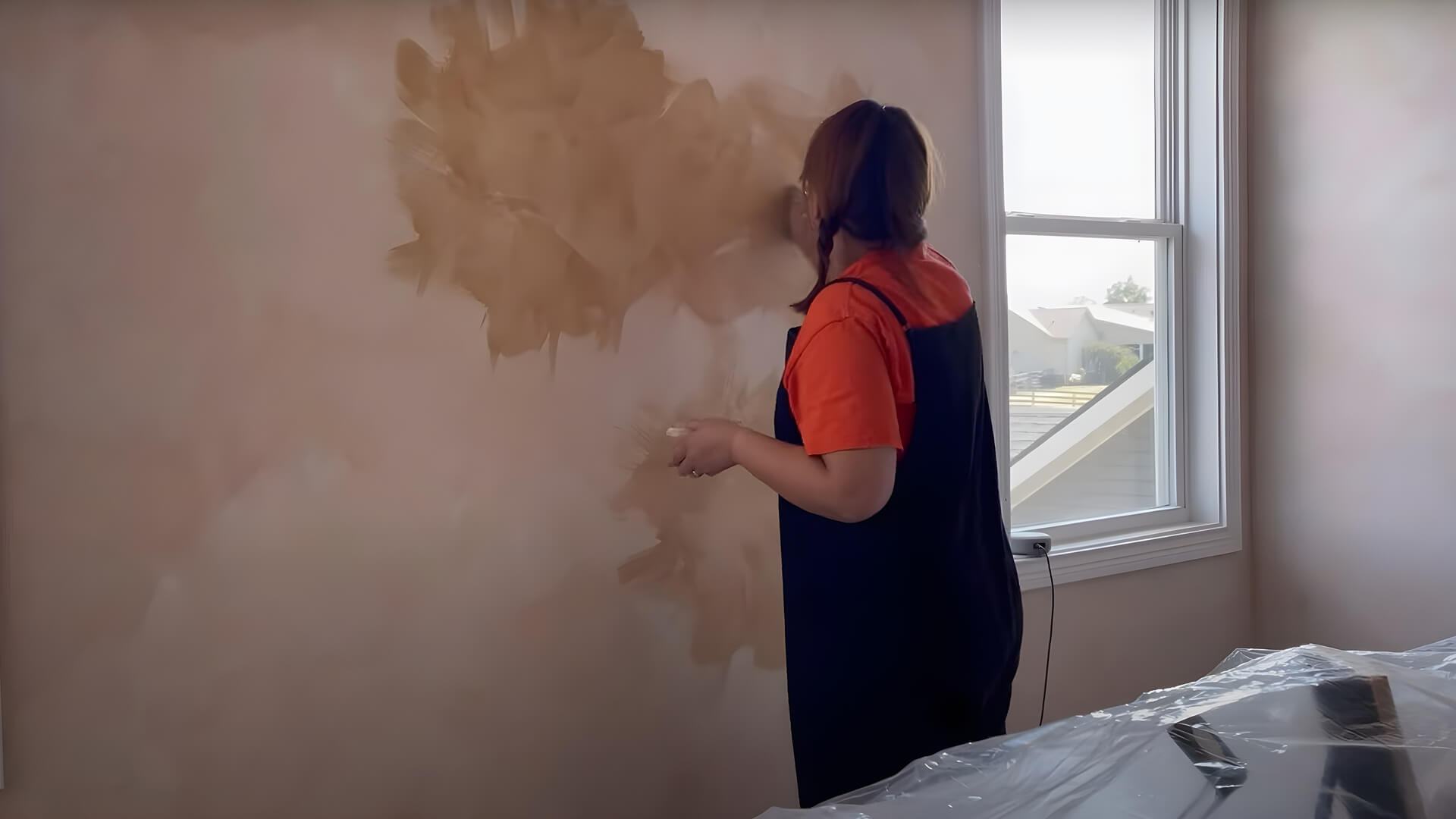
Roman Clay can go on a wall that is textured today, but not directly over the texture. Portola designed the finish for smooth interior surfaces, with Level 5 drywall preferred, so orange peel or knockdown gets skim coated flat before the first coat of clay. That prep stage carries most of the labor, and it is the difference between a wall that reads like troweled stone and one that shows every bump underneath.
Planning Roman Clay on a textured wall? Request a free in person estimate and we will start with the surface, not the color.
Can you use Roman Clay on textured walls?
You can use Roman Clay on a textured wall only after the texture is removed or skim coated to a smooth plane. Portola states that any texture, such as orange peel or knockdown, will cause difficulties in application. The clay itself will not solve the problem either: Portola describes Roman Clay as a material applied in thin, tight, overlapping coats that is not intended to fill imperfections, holes, or gaps. Whatever profile the wall has before the finish, the finish will follow it.
In practice that means the wall is brought to a smooth surface first. At VesaPainters we treat this as its own stage: skim coat over the existing texture, sand the wall flat, then prime. Only after that does the decorative application begin.
Do you need to prime before Roman Clay?
Yes, in nearly every case the wall should be primed before Roman Clay goes on. Portola advises an all purpose, stain blocking primer, and for new drywall specifies a water based, stain blocking drywall primer applied with a 3/8 to 1/2 inch nap roller. Stain blocking matters: Portola warns that oils and existing stains can show through if the surface is not properly prepped, and a hand troweled finish is not the place to rediscover an old water mark.
Two details from Portola’s guidance we follow on site: tint the primer for lighter shades, and for dark colors lay a base coat of ultra flat acrylic in the same color as the Roman Clay for a smoother, quicker application.
One exception: Portola allows starting directly over existing ultra flat paint in white or a color close to the finish, if it is in good condition and free of staining or patching. A textured wall almost never qualifies, because the fresh skim coat is bare joint compound and gets primed like new drywall.
What is a Level 5 finish and why does it matter?
Level 5 is a drywall finishing standard that adds a thin skim coat of joint compound over the entire wall, not just the joints. Standard finishing stops at Level 4, where seams and fasteners are finished but the open field of the board is untouched. Level 5 covers the whole plane so it reads as one uniform surface, which is what Portola calls for: Roman Clay is ideal for smooth interior surfaces, Level 5 drywall preferred.
The reason is light. A troweled mineral finish creates soft movement across the wall, and daylight raking in from a window will show every roller stipple, patch edge, or ridge that sits underneath it. Two thin coats of clay follow the plane they are given, so the plane has to be right first.
Can you apply Roman Clay on drywall or over existing paint?
Smooth drywall is the intended base for Roman Clay, and existing paint can work when it is flat, sound, and close to the finish color. On new drywall the sequence is primer first, then the finish: Portola describes Roman Clay as a two coat application, with each area covered more than once inside each coat. Portola lists coverage at 20 to 25 square feet per kilo in two coats, and the material is sold by weight, not volume.
Over existing paint, the deciding questions are sheen and condition. Flat paint in good shape and close to the finish color can take Roman Clay directly per Portola. Anything glossy, stained, or patched calls for the stain blocking primer first. Any texture sends the wall back to the skim coat.
How much does the prep drive the scope?
On a textured wall, surface prep usually carries more of the labor than the Roman Clay application itself. Skim coating a room, sanding it flat, and priming it takes time that grows with the condition of the walls. The finish stage runs on a fixed rhythm: Portola’s guidance has the base coat drying 2 to 4 hours before the next step, high or rough spots lightly sanded with 320 to 400 grit sandpaper, and a second coat applied in the same thin manner. Prep expands with the wall; application mostly does not.
VesaPainters quotes Roman Clay as labor, the Portola material is purchased separately, and the prep scope is listed as its own line in the estimate. How those pieces shape a number, we break down in what actually drives Roman Clay cost.
Los Angeles housing stock shows up right here. Much of the San Fernando Valley was built or remodeled in decades when orange peel and knockdown were the default, so homes in Sherman Oaks and Encino often start with a full skim coat. Older houses around Studio City or Beverly Hills can bring original plaster instead, which gets evaluated wall by wall. VesaPainters applies Roman Clay finishes across the Valley and Greater LA, and every estimate starts with the surface.
Frequently Asked Questions
Can Roman Clay hide cracks or holes in a wall?
No. Portola states the material is applied in thin coats and is not intended to fill imperfections, holes, or gaps. Repairs and smoothing happen in the prep stage, before the first coat.
Can you apply Roman Clay over tile?
Portola’s published prep guidance covers drywall and previously painted walls, and the finish requires a smooth substrate. Tile with grout joints would first need to be brought to a flat, primed plane, which we assess on site before quoting.
Do you sand between coats of Roman Clay?
Portola recommends lightly sanding high or rough spots with 320 to 400 grit sandpaper after the base coat. Dust is wiped off with a clean rag before the next coat.
How long does Roman Clay take to dry between coats?
Portola lists 2 to 4 hours of drying for the base coat. The thinner the material is pulled, the faster it dries and the sooner the wall can be recoated.
Does a textured wall need more Roman Clay material?
Not really. Portola lists coverage at 20 to 25 square feet per kilo in two coats, and texture does not change that much. What texture adds is prep labor, because the wall is smoothed before the finish, not filled with extra clay.
If your walls are orange peel today and you want them reading like troweled stone, the path runs through prep, and prep is measurable. Send a few photos or book a free in person estimate, and we will tell you what your walls need before any color talk.