
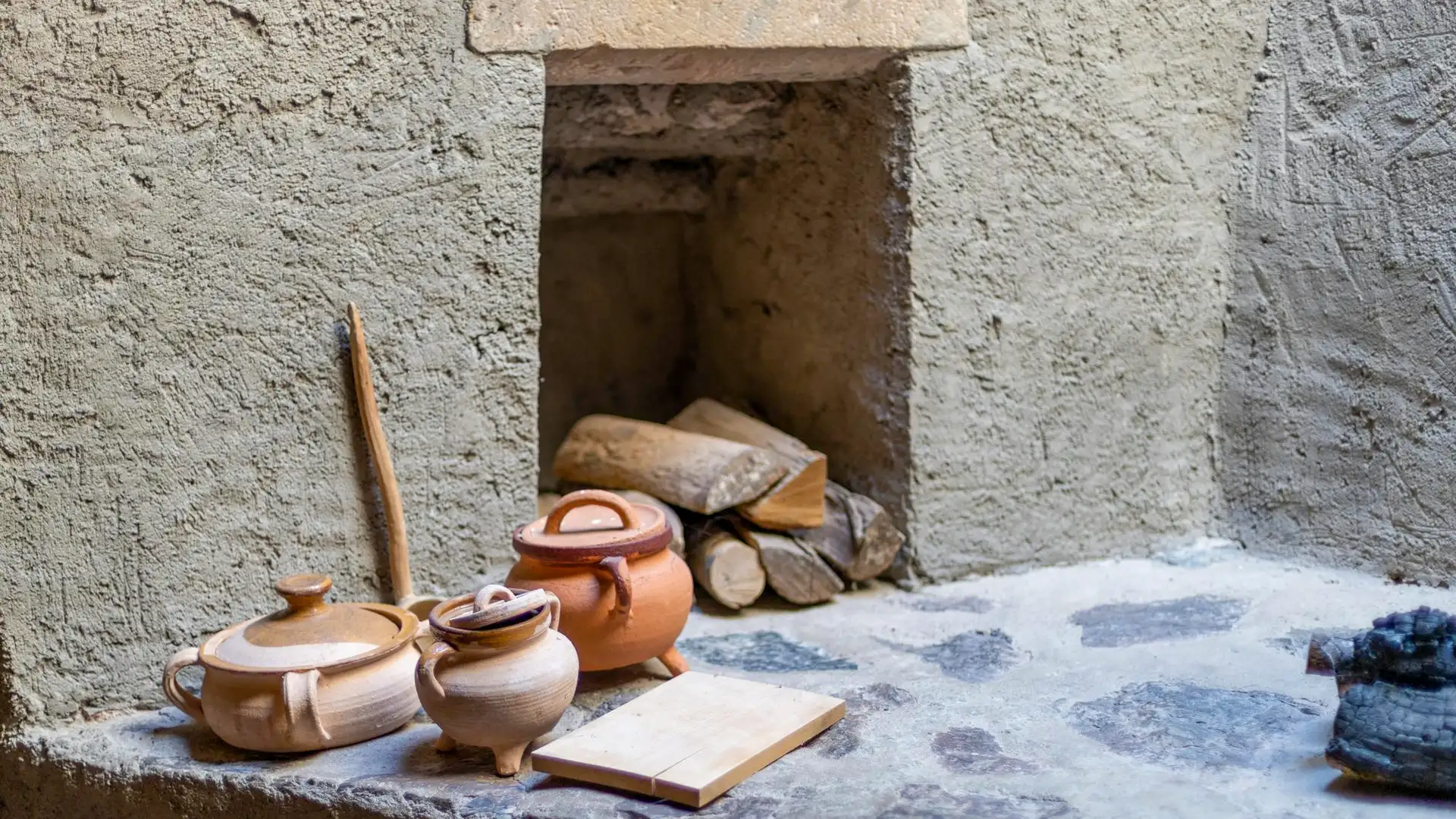
Roman Clay belongs on the fireplace surround and the chimney wall above it, not inside the firebox. Portola’s published guidance covers smooth interior surfaces and does not include heat ratings, so VesaPainters keeps the finish on the room side of the fireplace and leaves the firebox zone to the unit’s listing and local building code. Done that way, a troweled clay surround is exactly where the material shows its depth.
Thinking about a Roman Clay fireplace? Request a free in person estimate and we will look at the surround, the substrate, and the clearances before anything else.
Can you use Roman Clay on a fireplace?
Roman Clay can go on a fireplace surround and the wall around it, as long as the surface is smooth and the area does not get hot. Portola lists Roman Clay for smooth interior surfaces, Level 5 drywall preferred, and the material is applied in thin, tight, overlapping coats that are not intended to fill imperfections, holes, or gaps. A drywall chimney breast or a skim coated surround fits that description.
What Portola’s published materials do not include is a heat rating or fireplace specific instructions. That is why the finish stays on the room side: the surround, the face wall, the chimney breast above the mantel. VesaPainters draws that line on every fireplace project before a color is even discussed.
Can you apply Roman Clay over a brick fireplace?
Not directly. Brick has to be leveled to a smooth plane before Roman Clay goes on. The clay will not bridge mortar joints or brick texture: Portola states the material is applied in thin coats and is not intended to fill gaps. Whatever profile is left under the finish will read through it.
In practice the brick face gets a leveling skim system suited to masonry, is sanded flat, and is then primed with the all purpose, stain blocking primer Portola advises. Painted brick and raw brick both end at the same place, a smooth primed plane; what changes is how many leveling passes it takes to get there. On a brick conversion that prep is the bulk of the labor, and it is what the final surface stands on.
What about the firebox area?
The firebox and any surface that gets hot are not a decorative finish question, they are a code question. Portola’s published specifications for Roman Clay, meaning the FAQ, the technical data sheet, and the product pages, do not include temperature limits or firebox guidance, so VesaPainters does not apply Roman Clay inside the firebox, on the firebox facing, or on any surface that heats up in use.
Clearances around the opening and the materials allowed there are set by the fireplace unit’s listing and by local building code, and they differ between a wood burning masonry fireplace and a modern gas insert. On an estimate we identify where that boundary sits for your specific unit, and the clay starts outside it.
Should a Roman Clay fireplace be black or white?
Both work, and they behave differently on the wall. Portola notes that more pigmented colors show more movement and variation, so a black or deep charcoal surround reads dramatic, with visible trowel work. Whites and lighter colors have a more subtle movement quality per Portola, closer to soft stone.
Two application details follow from Portola’s guidance. For dark colors, a base coat of ultra flat acrylic paint in the same color makes the application smoother and quicker, and flexible stainless steel knives are recommended. For lighter colors Portola recommends plastic putty knives, since metal can leave gray burnish marks. If the surround will be sealed, pick the shade with the sealer in mind: Portola states the Topcoat darkens colors 10 to 20 percent depending on the shade.
What does the prep involve?
A fireplace surround follows the same sequence as any Roman Clay wall: smooth substrate, primer, two thin coats, and an optional Topcoat. On drywall the surface is checked against the Level 5 standard; on brick or stone it is leveled first, as above. Portola’s process then runs base coat, drying 2 to 4 hours, a light sanding of high spots with 320 to 400 grit sandpaper, and a final coat pulled just as thin.
The Topcoat is optional, but it earns its keep here more than on a typical wall, because a mantel zone gets touched, dusted, and leaned on. Portola describes the Topcoat as a low sheen sealer that protects against dirt and water, notes that it does not waterproof or stain proof the finish, and recommends refreshing it every few years in high traffic areas. The material math stays small: Portola lists coverage at 20 to 25 square feet per kilo in two coats, and quantities start at one kilo, so a typical surround sits at the low end of the range.
In Los Angeles this project usually starts from one of two places. Valley houses in Sherman Oaks or Encino often carry the painted brick fireplace of their era, which means a leveling stage before any clay. Homes around Studio City and Beverly Hills more often bring a drywall or plaster chimney breast that is close to ready. VesaPainters applies Roman Clay finishes across the San Fernando Valley and Greater LA, and a fireplace is scoped like any of our walls: the prep is priced as its own line.
Frequently Asked Questions
Is Roman Clay heat resistant?
Portola’s published specifications for Roman Clay do not include heat ratings or temperature limits. For that reason we keep the finish on the surround and the surrounding wall, and the firebox zone follows the fireplace listing and local building code.
Can you put Roman Clay directly on brick?
No. Portola states the material is applied in thin coats and is not intended to fill gaps, so mortar joints and brick texture get leveled to a smooth, primed plane first.
Do you need the Topcoat on a fireplace surround?
It is optional. Portola describes it as a low sheen sealer that protects against dirt and water and darkens the color 10 to 20 percent, and mantel height areas see enough contact that we often recommend it.
How much Roman Clay does a fireplace surround need?
Portola lists coverage at 20 to 25 square feet per kilo in two coats, and the material is sold by weight starting at one kilo. A typical surround or chimney breast falls within the smaller quantities.
A fireplace is the one wall in the room everyone faces, and it rewards the honest sequence: level the substrate, respect the clearances, then let the clay work. Send a photo of your fireplace or book a free in person estimate, and we will map the surround, the substrate, and the firebox boundary for your specific unit.