
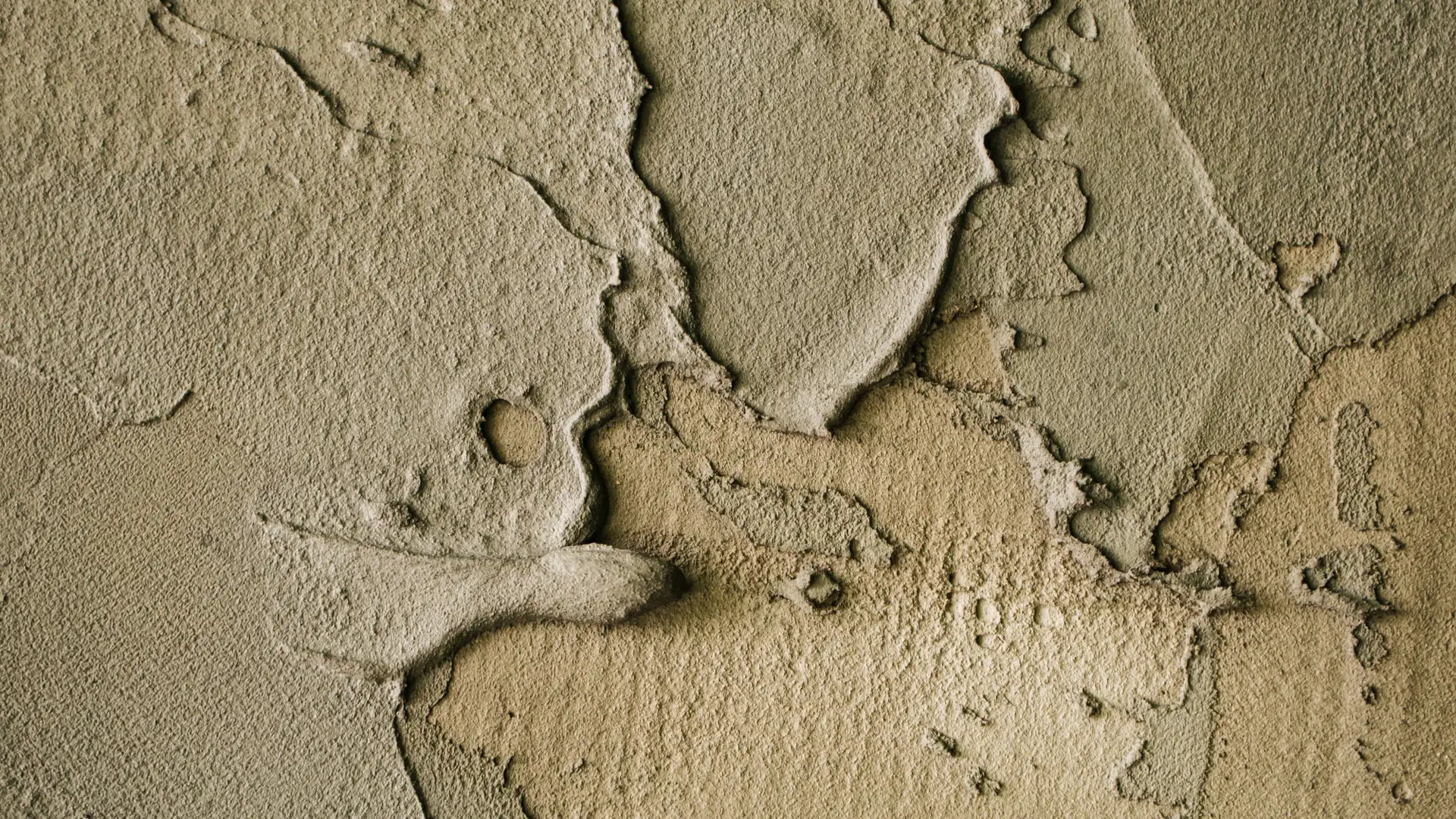
Portola’s published materials cover applying Roman Clay, not undoing it. There is no factory procedure for repainting or removal, so this article does what a contractor actually does: reasons from what the material is, tests before committing, and scopes the least invasive path to the wall you want next.
Need a Roman Clay wall changed? Request a free in person estimate and we will run a test patch before promising anything.
Can you paint over Roman Clay?
Nothing in Portola’s published materials, the FAQ, the technical data sheet, or the product pages, describes repainting a Roman Clay wall. That does not make it impossible; it makes it a judgment call that starts with what the surface actually is: a smooth, hand troweled mineral finish, either bare or sealed with the Roman Clay Topcoat.
VesaPainters approaches it the way adhesion questions get approached on any specialty finish. We run a test patch first: scuff sand a small area, apply a bonding or stain blocking primer, let it cure, and check how it holds. If the patch passes, the wall gets a light scuff sand, primer, and the new paint system. If it does not, the conversation changes to skim coating, because paint is only as stable as the layer under it.
What changes if the wall has the Topcoat?
The Topcoat is a sealer, and a sealer’s whole job is to keep things from soaking in, which is exactly what a primer wants to do. Portola describes it as a low sheen coat that protects against dirt and water, so for repainting, that layer is what the test patch has to answer for. And if the wall carries several coats of sealer, added over the years in a high traffic spot, the patch matters even more.
The one removal adjacent instruction Portola does publish is small scale. For scuffs on unsealed walls, fine sandpaper in the 400 to 600 grit range; for sealed walls, sanding the spot and reapplying sealer carefully so it does not overlap the old coat. It tells you the finish tolerates careful sanding, and that is useful information for everything below.
Can Roman Clay be removed completely?
Portola publishes no removal procedure either, and the material explains why the question is hard. Roman Clay goes on in thin, tight coats and cures into a mineral layer bonded to the primer and drywall under it. Nothing in the published materials offers a dissolve and wipe route the way wallpaper has one.
In practice full removal means mechanical work: sanding the surface back and skim coating over it to rebuild a flat plane, or, where a wall has bigger problems anyway, replacing the drywall outright. On most walls the skim route wins, because it takes less demolition, makes less dust, and ends at the same place a fresh prep would: a smooth blank surface ready for any finish. Either way the work is dusty, so in occupied homes we mask, contain, and vacuum sand where the setup allows it.
Covering or removing: what decides the path?
The wall’s next job decides. If the goal is ordinary painted walls and the clay is sound, test patch, scuff sand, and primer is usually the shortest path. If the goal is a different specialty finish, or the clay layer is failing, loose, or heavily patched, skim coating over the sanded surface gives the new finish an honest base. Removal down to the board is the last resort, reserved for walls with damage under the finish.
In Los Angeles the question usually arrives mid remodel: a Valley house in Sherman Oaks or Encino changing direction after a few years with a dark feature wall, or a Studio City listing being neutralized for sale. Beverly Hills projects tend to swap one specialty finish for another, which points to the skim route. VesaPainters handles Roman Clay finishes and their exits across the San Fernando Valley and Greater LA, and either path is scoped on site, with prep priced as its own line.
Frequently Asked Questions
Does Portola provide instructions for painting over Roman Clay?
No. The published FAQ, technical data sheet, and product pages cover application and care, not repainting. We work from an adhesion test patch instead of a factory procedure.
Can you remove Roman Clay without replacing the drywall?
Usually the wall does not need new board. Sanding back and skim coating over the finish rebuilds a flat plane; drywall replacement is reserved for walls with damage underneath.
Can you apply new Roman Clay over old Roman Clay?
Portola’s published guidance covers small touch ups and notes they are hard to blend invisibly. A full recoat is assessed on site the same way repainting is: surface condition first, test area second.
Is it faster to paint over Roman Clay or remove it?
Painting over is usually the shorter path when the finish is sound: scuff sand, primer, paint. Removal or skim coating enters when the layer is failing or the next finish needs a rebuilt base.
Will the old color or stains show through the new paint?
That is what the primer stage exists for. Portola’s own prep guidance warns that oils and existing stains can show through a surface that is not properly prepped, and the same logic applies in reverse: a stain blocking primer goes down before the new color.
A Roman Clay wall is not a trap; it is a surface that deserves a test before a promise. Send photos of the wall and what you want it to become, or book a free in person estimate, and we will run the patch, read the result, and quote the honest path.