
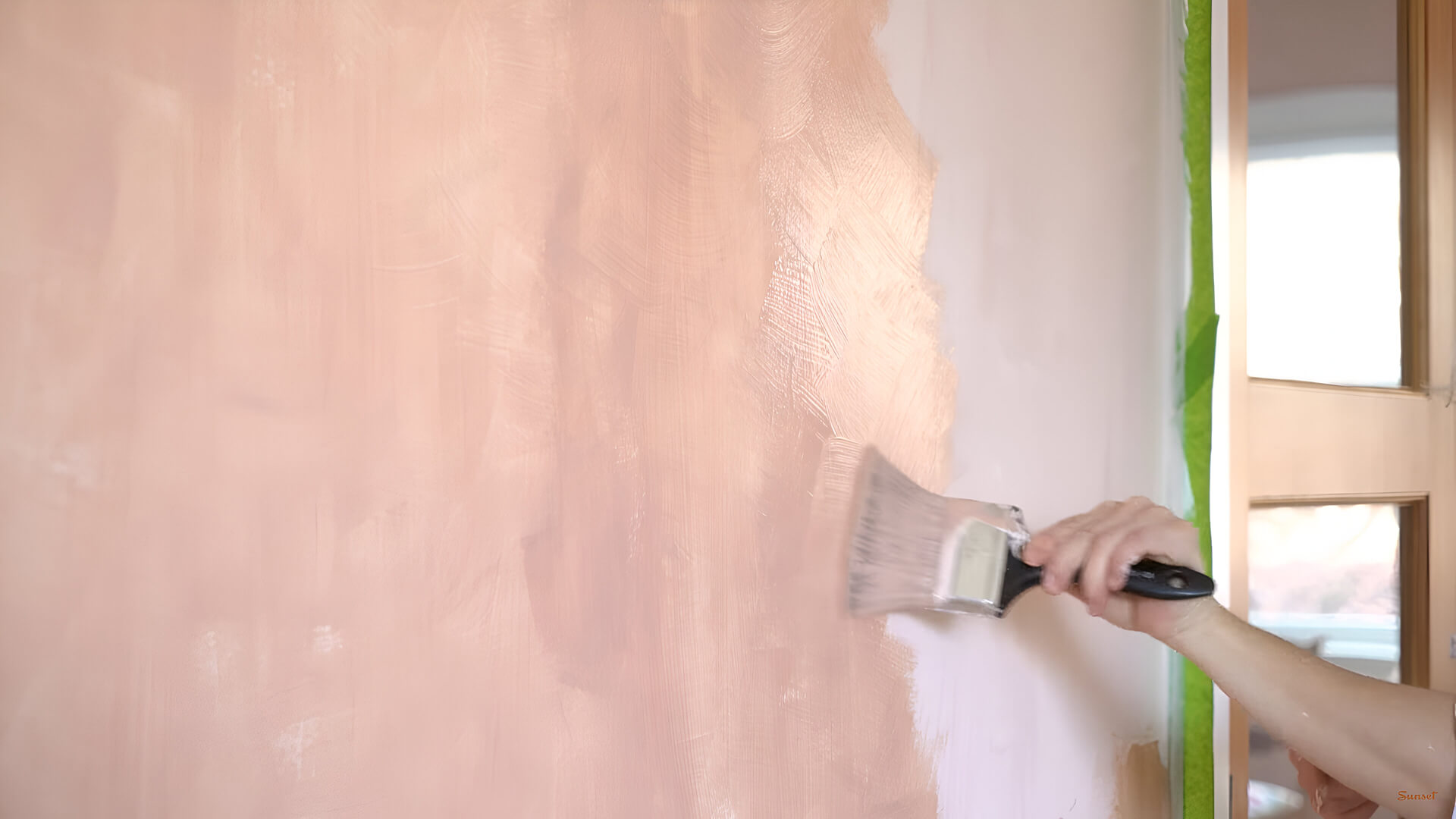
On the same interior wall, Roman Clay usually quotes higher than limewash in our estimates, and the gap comes from labor and prep, not from the paint store. Both are Portola mineral finishes, both are specialty work, but they ask for very different hours. This article lays out the cost drivers honestly, without invented per square foot numbers, because a real price only exists after we see the wall.
Deciding between the two finishes? Request a free in person estimate and we will quote both paths for your actual walls.
Why does Roman Clay carry more labor?
Roman Clay is trowel work from start to finish. Portola’s process runs a base coat pulled in thin, tight, overlapping strokes, drying time, a light sanding pass, and a final coat applied just as carefully, all with putty knives in hand, not a roller. Every square foot is skilled hand movement twice over, plus the sanding between.
The substrate raises the bar further. Portola lists smooth interior surfaces with Level 5 drywall preferred, so walls with texture, patches, or history get skim coated flat before the first trowel stroke. On many projects that prep stage carries as many hours as the finish itself, which is why we price it as its own line.
Where does limewash save on labor?
Limewash is brushed, and the brush is more forgiving. Portola’s Lime Wash goes on in broad cross strokes, the mottled movement is the point rather than a defect to chase, and the surface underneath does not need to be a mirror. Portola lists it for interior and exterior use, including masonry and brick, which means textured surfaces that would demand full skim coating for Roman Clay can often take limewash as they stand.
Coverage math leans the same way. Portola lists Lime Wash coverage at 150 to 200 square feet per gallon, while Roman Clay covers 20 to 25 square feet per kilo in two coats and is sold by weight. Under our labor only model the client buys the material either way, but fewer application hours per wall is what actually moves the quote.
What about sealers and extras?
Both systems have an optional protective layer, and both add a line to the scope when chosen. For Roman Clay, Portola’s Topcoat is a low sheen sealer that protects against dirt and water and darkens the color 10 to 20 percent; sanding and sealing time goes into the quote. For limewash, Portola’s Matte Wall Sealer is suited to whites and lighter colors, and exterior work brings its own preparation products.
Color choices nudge cost too. Portola advises an ultra flat base coat in the same color for dark Roman Clay shades, which is one more coat of work, and tinted primer helps lighter shades cover. None of this is dramatic on its own; it stacks.
When does limewash end up the bigger project?
Flip the setting and the comparison flips. Limewash is at home outdoors per Portola, and exterior work brings ladders, lifts, masking, and sheer square footage that no interior feature wall approaches. A two story limewashed exterior is a bigger undertaking than a Roman Clay living room wall, every time the square footage says so.
Scale works indoors too. One troweled accent wall can quote below a whole house limewash refresh simply because there is less wall. The material choice sets the rate of labor per square foot; the house sets how many square feet there are.
How should you actually decide?
Decide on the look first, then let the quote confirm the budget. The two finishes read differently: troweled cloudy depth against brushed mottled softness, and the visual comparison is covered in Roman Clay vs Venetian plaster vs limewash. What drives the Roman Clay side of the money is broken down in our cost guide.
We quote both finishes across the San Fernando Valley, from Woodland Hills to Studio City, and in Encino and Beverly Hills projects the two often compete for the same wall. VesaPainters prices both finishes the same way: labor only, Portola material purchased by the client, prep and sealer as their own lines, and the numbers come from your walls, not from a chart.
Frequently Asked Questions
Is Roman Clay more expensive than limewash?
On the same interior wall, usually yes in our quotes. Roman Clay is troweled in multiple thin coats with sanding between and asks for a Level 5 smooth substrate, while limewash is brushed and tolerates texture and masonry, so the labor hours differ.
Why is Roman Clay labor higher?
Every coat is hand troweled in thin overlapping strokes, there is a sanding pass between coats, and Portola lists smooth Level 5 drywall as the preferred substrate, which often means skim coating before the finish even starts.
Does limewash need a sealer like Roman Clay does?
Both sealers are optional. Portola’s Roman Clay Topcoat protects against dirt and water and darkens the color 10 to 20 percent; Portola’s Matte Wall Sealer for limewash is suited to whites and lighter colors.
How do I get a real number instead of an internet average?
Send photos of the walls or book a free in person estimate. We quote labor only, the Portola material is purchased separately, and prep is priced as its own line, so the number reflects your actual surfaces.
The honest answer to which costs more is the boring one: the finish that asks for more hours on your specific walls. Send photos of the space, or book a free in person estimate, and we will price the Roman Clay path and the limewash path side by side.